
from 1 review
7 Days
Up to 7 days
20 people
English, Espanol, French, German
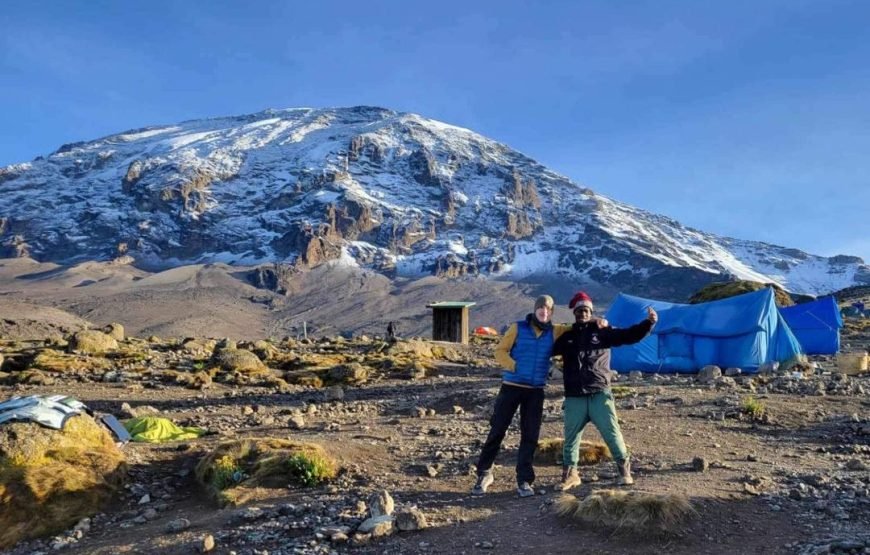
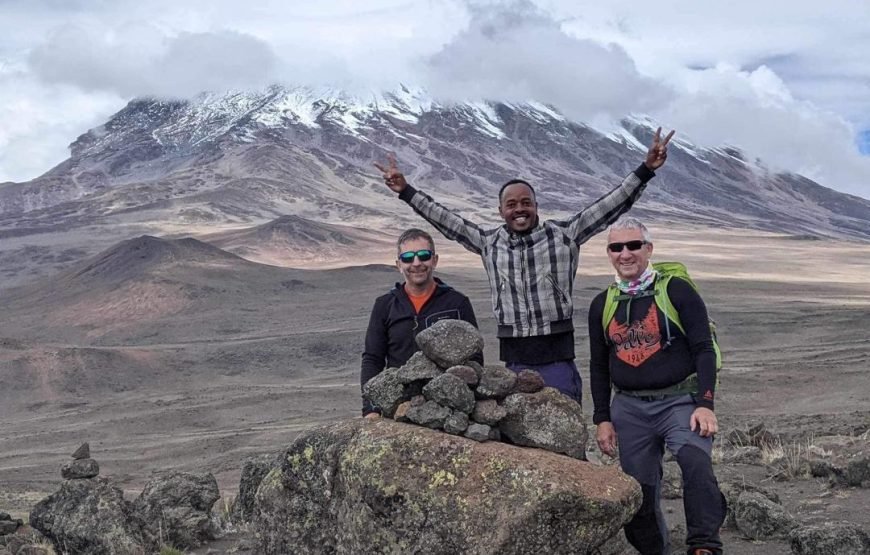
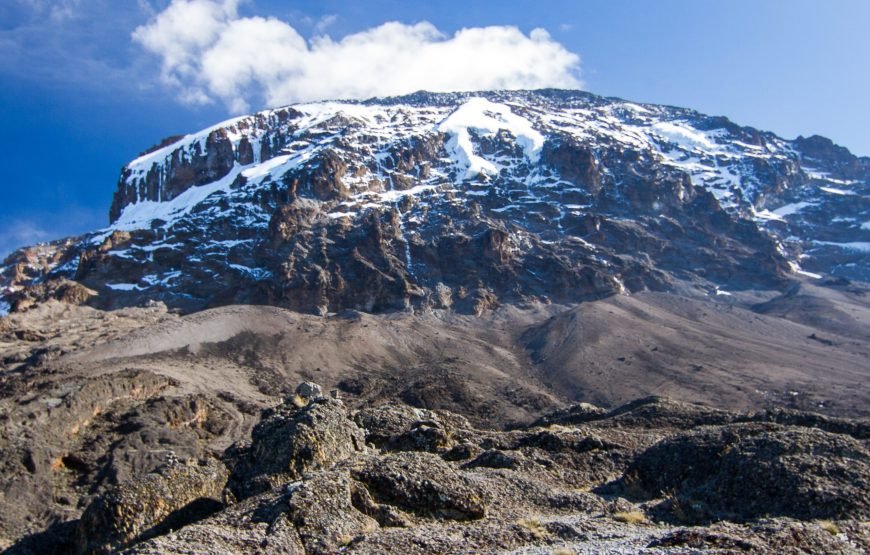
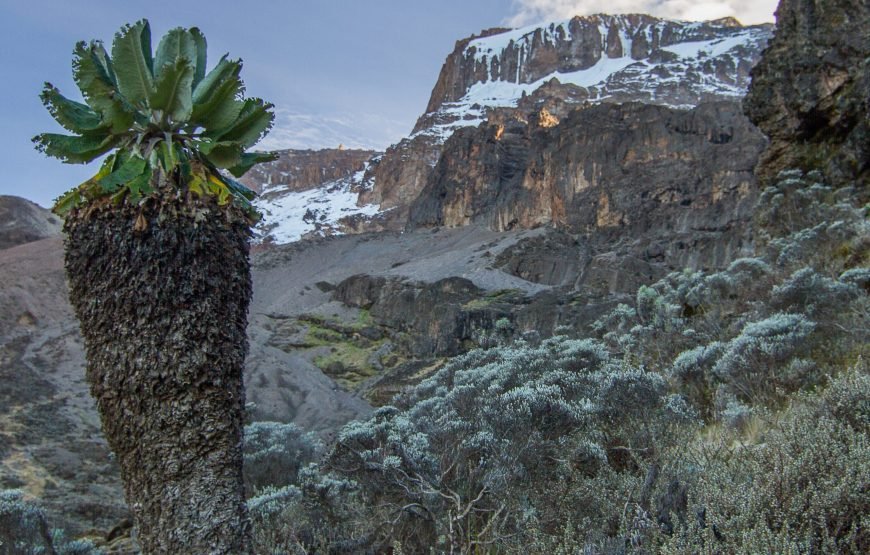
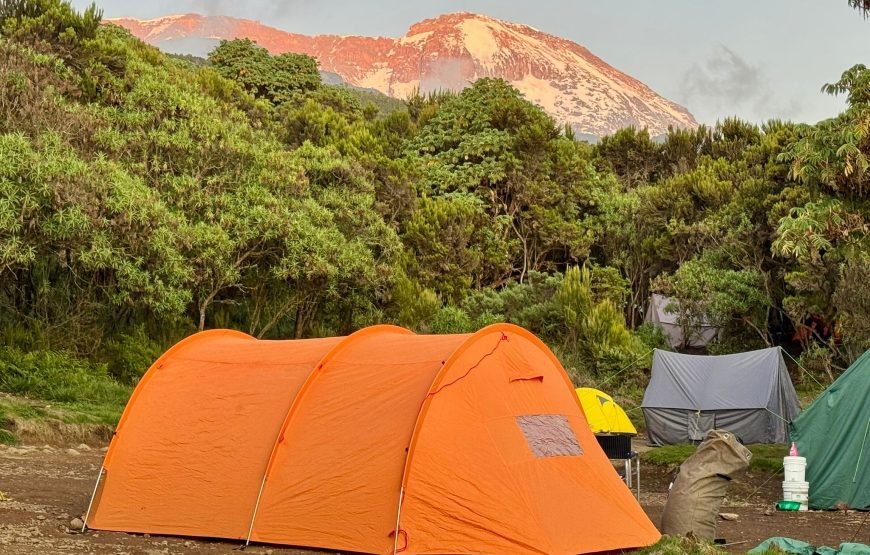
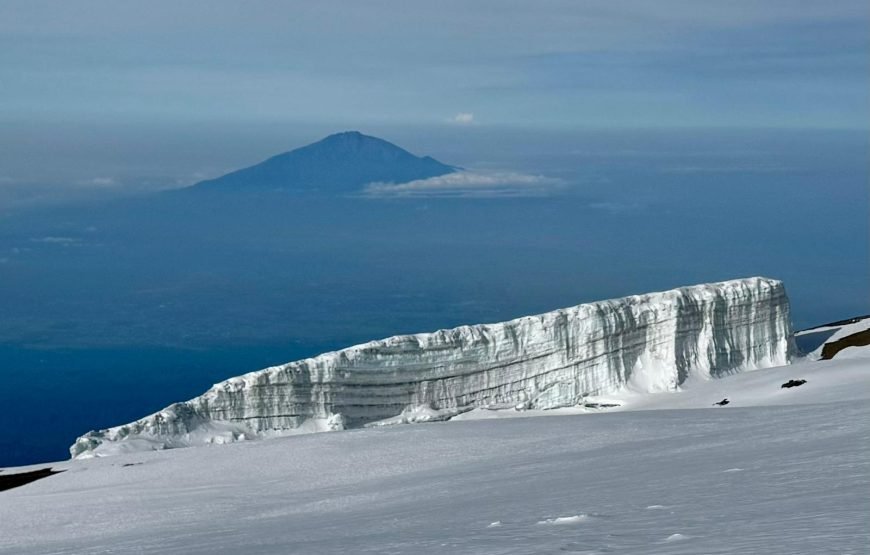
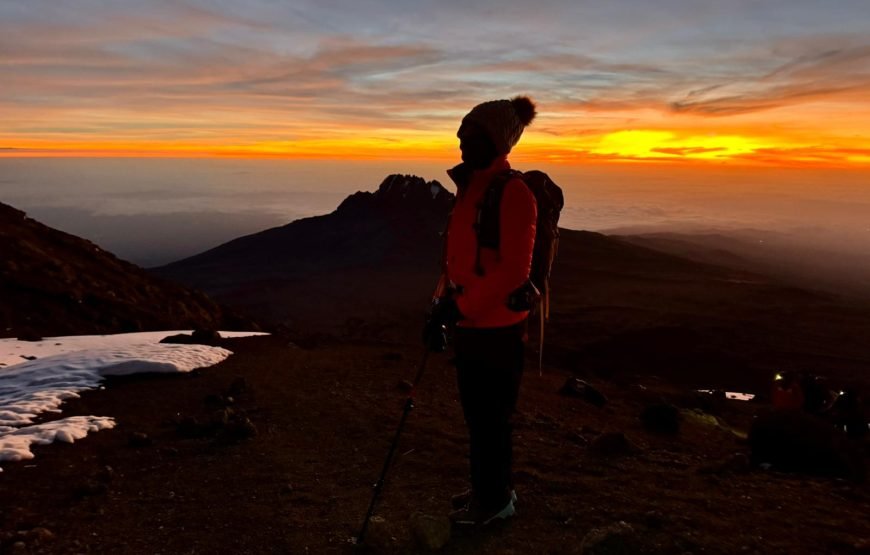
The Machame Route, often referred to as the “Whisky Route,” is the second most popular path and widely regarded as one of the most scenic routes up Mount Kilimanjaro.
Compared to the Marangu Route, Machame is longer and slightly more challenging, making it ideal for travelers seeking a more adventurous trekking experience. While the Marangu Route offers hut accommodations, the Machame Route is exclusively camp-based, with all overnight stays in tents.
This route is particularly rewarding for those who enjoy diverse landscapes, as it showcases breathtaking scenery that is not experienced on the Marangu Route. Despite its higher difficulty level, the Machame Route boasts an impressive summit success rate of approximately 80%, making it both challenging and achievable.
How to get there:
Your journey begins with a transfer from your hotel in Moshi to Machame Gate, a drive of approximately 45 minutes. Along the way, you will pass through Machame village, known for its lush cultivation of bananas and coffee.
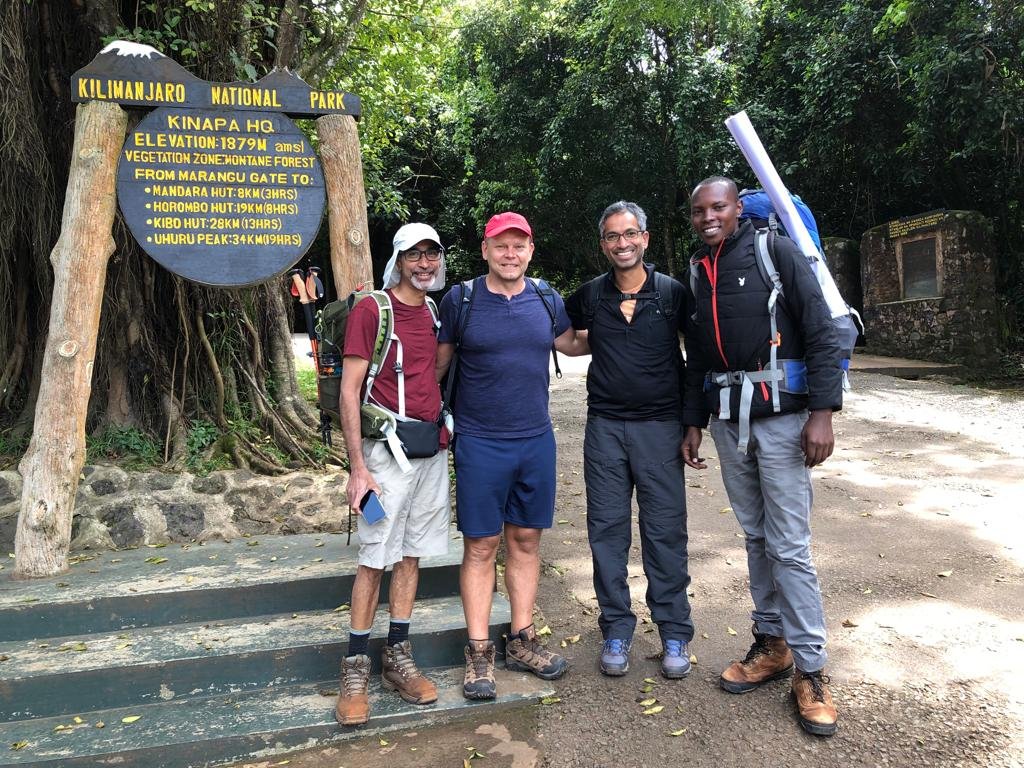
The first day trekking begins at Machame Gate (1,640 meters). Typically you will drive from the town of Moshi to the gate, which takes approximately an hour. On the way you will get to see subsistence farming and the town of Machame. The first day trek on the Machame Route is a long one (~11km / 7miles) and takes approximately 5-7 hours to complete. We mostly supply packed lunch for this route and 2-3 litres of bottled water. This is the only bottled water you will receive. From here on porters will collect water from mountain streams. The day’s trekking ends at Machame Camp (2,835 meters) which sits near the border of the rainforest zone and the low alpine zone. By the time you arrive your porters will have already setup your camp and tents, and dinner will be served.
Transport: Private transfer (0.8 hour, 30 km)
Hiking time: 6 – 7 hours (11 km)
Acent: 1200 m altitude: 3000 m
Accommodation: Camping
Meals included: Breakfast / Lunch / Dinner
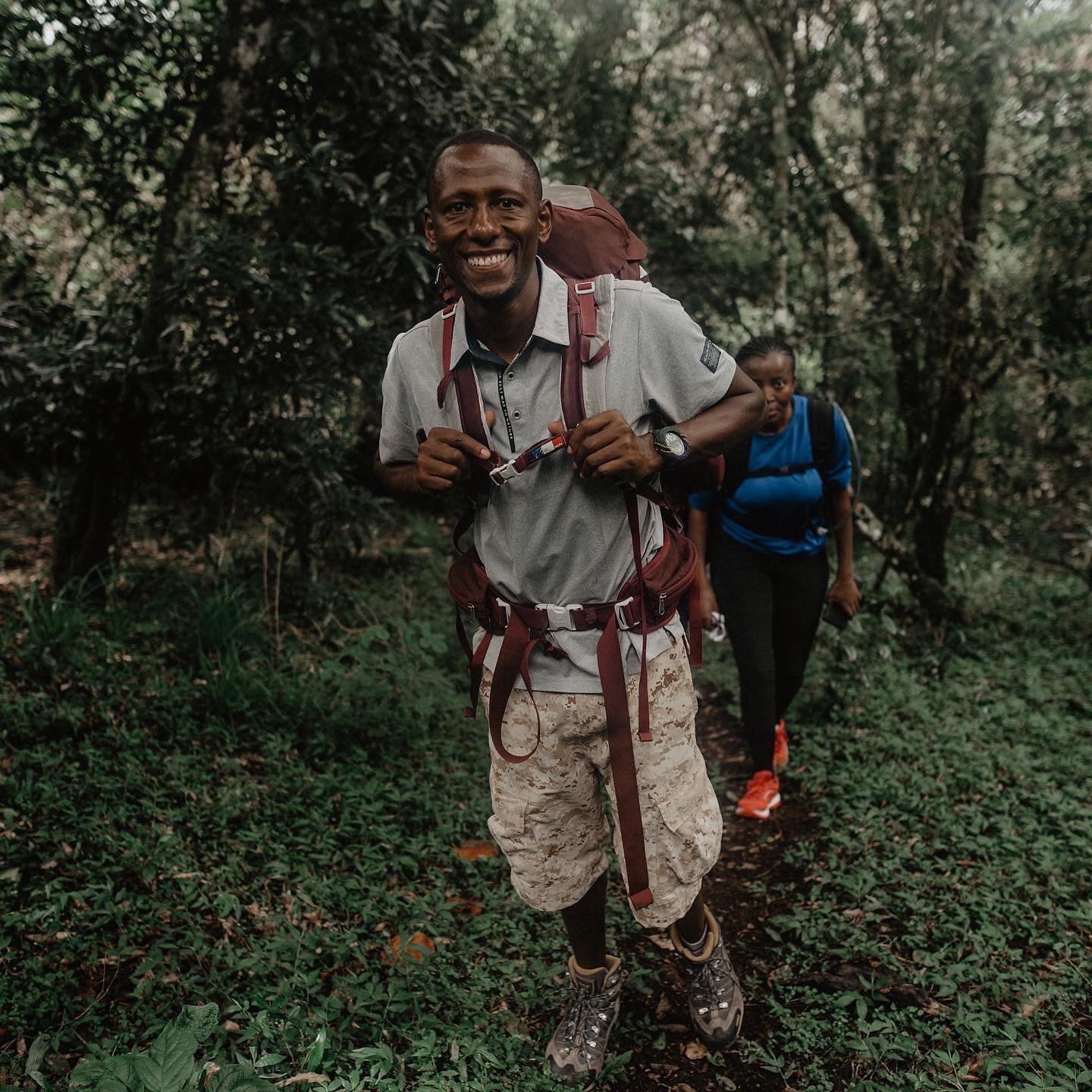
On day two you will rise early, pack your gear and prepare for the trek from Machame Camp to Shira Camp 2 (3,850 meters). The trek is relatively steep as you enter the low alpine zone which is characterized by moorlands and grasslands. Shira Camp 2 sits on a plateau which provides you with the first views of Kibo in the North-West and Mount Meru in the East. Day two takes approximately 4-6 hours and covers a distance of 5km / 3miles.
Hiking time: 5 – 6 hours (5 km)
Ascent: 850 m altitude: 3850 m
Accommodation:
Camping Meals included: Breakfast / Lunch / Dinner
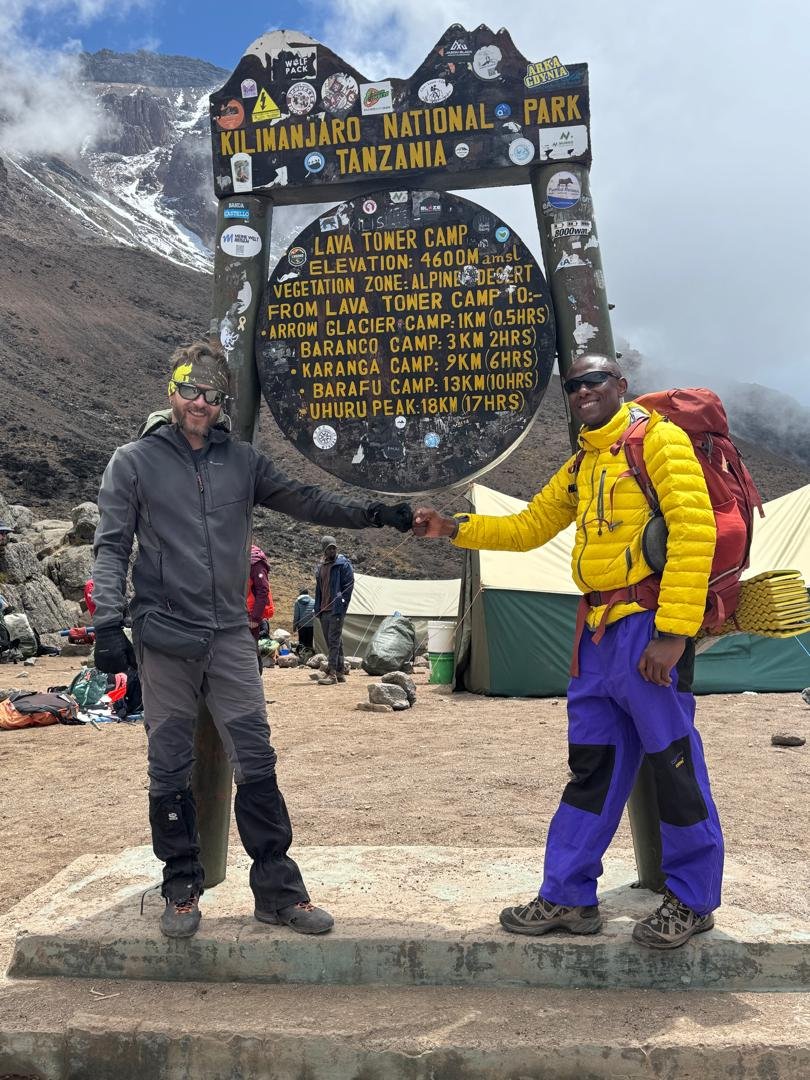
Day three is a long and tough trek east off the Shira Plateau through the ‘Garden of the Senecios’, up to Lava Tower and the Shark’s Tooth rock formation at 4,600 meters and then back down via the Southern Circuit to Barranco Camp (3,900 meters). After lunch we will descend to Barranco Camp, following the ‘walk high, sleep low’ golden rule of acclimatization. Our descent to Barranco Camp takes about 2 hours and offers great opportunities to take some beautiful photographs of the Western Breach and Breach Wall. The route is approximately 11km / 7 miles in length and takes 5-7 hours to complete.
Hiking time: 6 – 7 hours (7 km)
Ascent: 750 m
Descent: 650 m altitude: 4600 m
Accommodation: Camping
Meals included: Breakfast / Lunch / Dinner
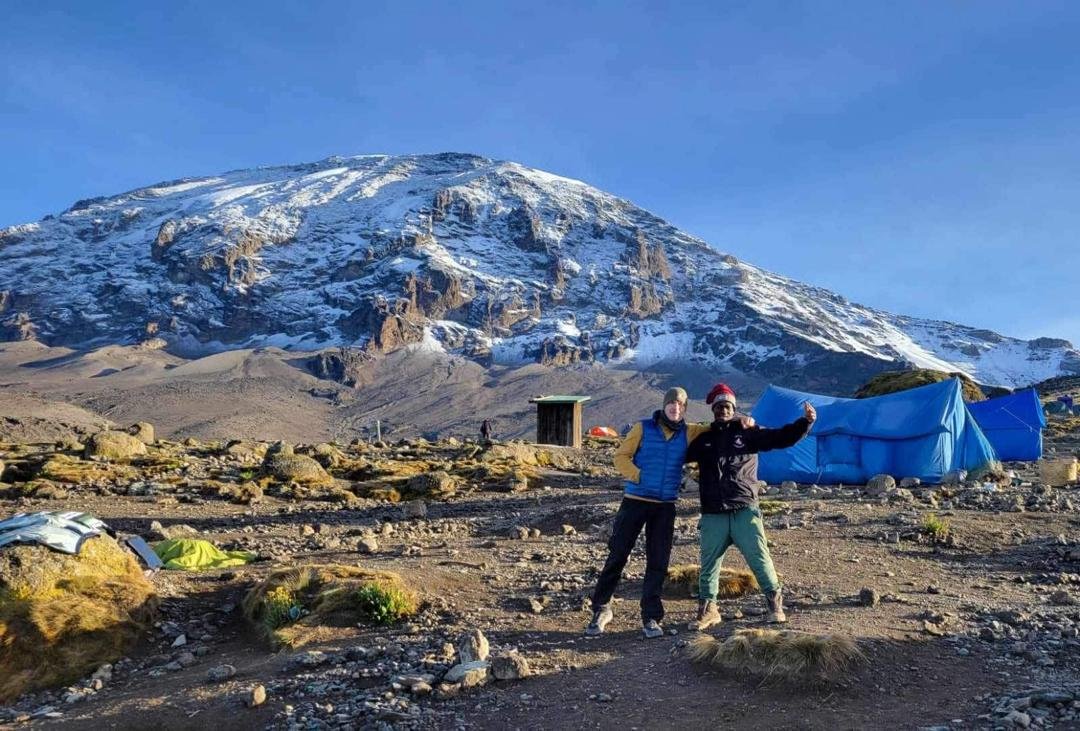
A short, but fun, day starting with a scramble to the top of the Great Barranco Wall. We then traverse over scree to the Karanga Valley (3930m) beneath the icefalls of the Heim, Kersten and Decken Glaciers. We will stay overnight at Karanga campsite. This is a shorter day meant for acclimatization.
Hiking time: 4 – 5 hours (5 km)
Ascent: 260 m
Descent: 280 m
Altitude: 4210 m
Accommodation: Camping
Meals included: Breakfast / Lunch / Dinner
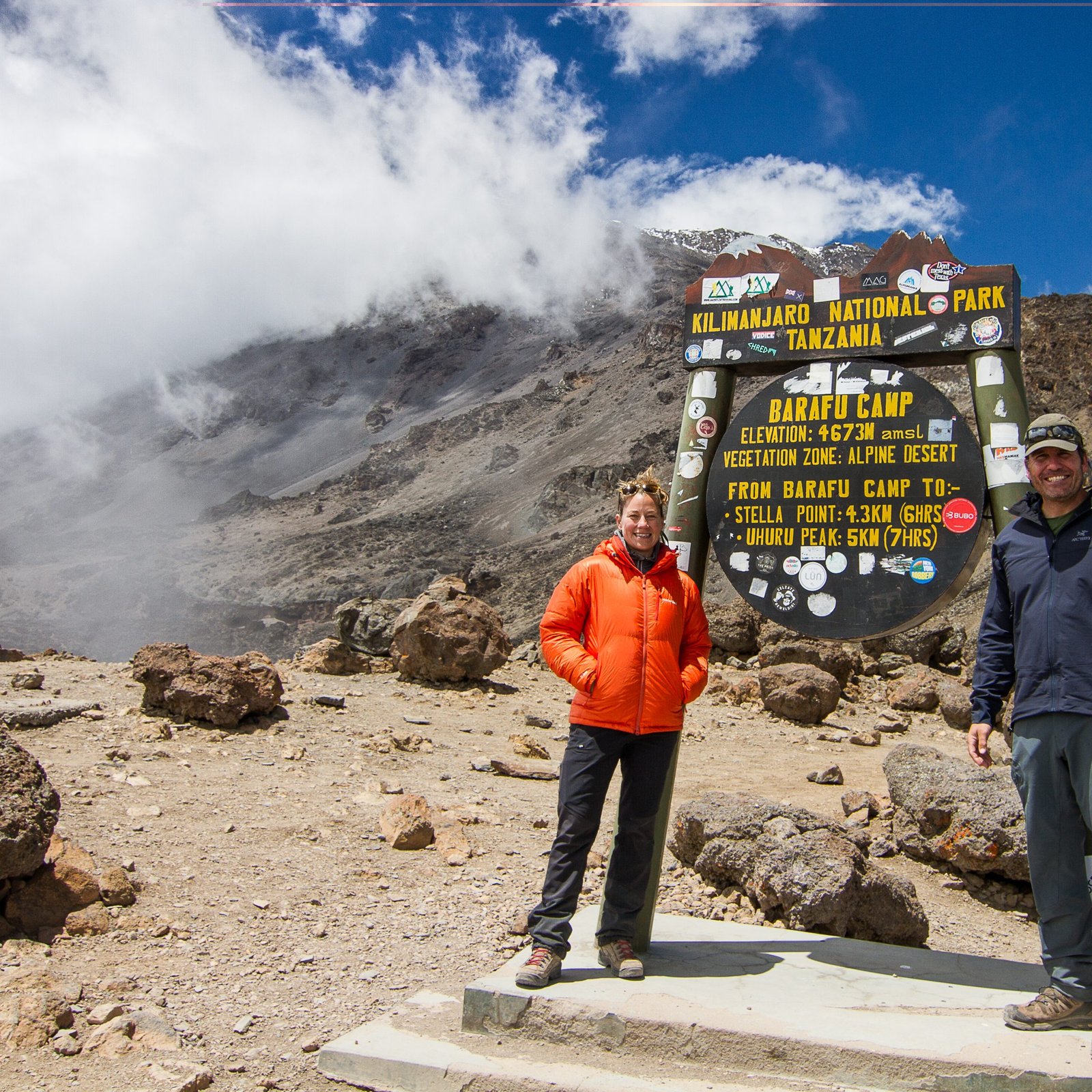
We leave Karanga and hit the junction which connects with the Mweka Trail. We continue up to the rocky section to Barafu Hut. At this point, you have completed the Southern Circuit, which offers views of the summit from many different angles. Here we make camp, rest and enjoy an early dinner to prepare for the summit day. The two peaks of Mawenzi and Kibo are viewable from this position.
Hiking time: 3 – 4 hours (4 km)
Ascent: 670 m
Altitude: 4700 m
Accommodation: Camping
Meals included: Breakfast / Lunch / Dinner
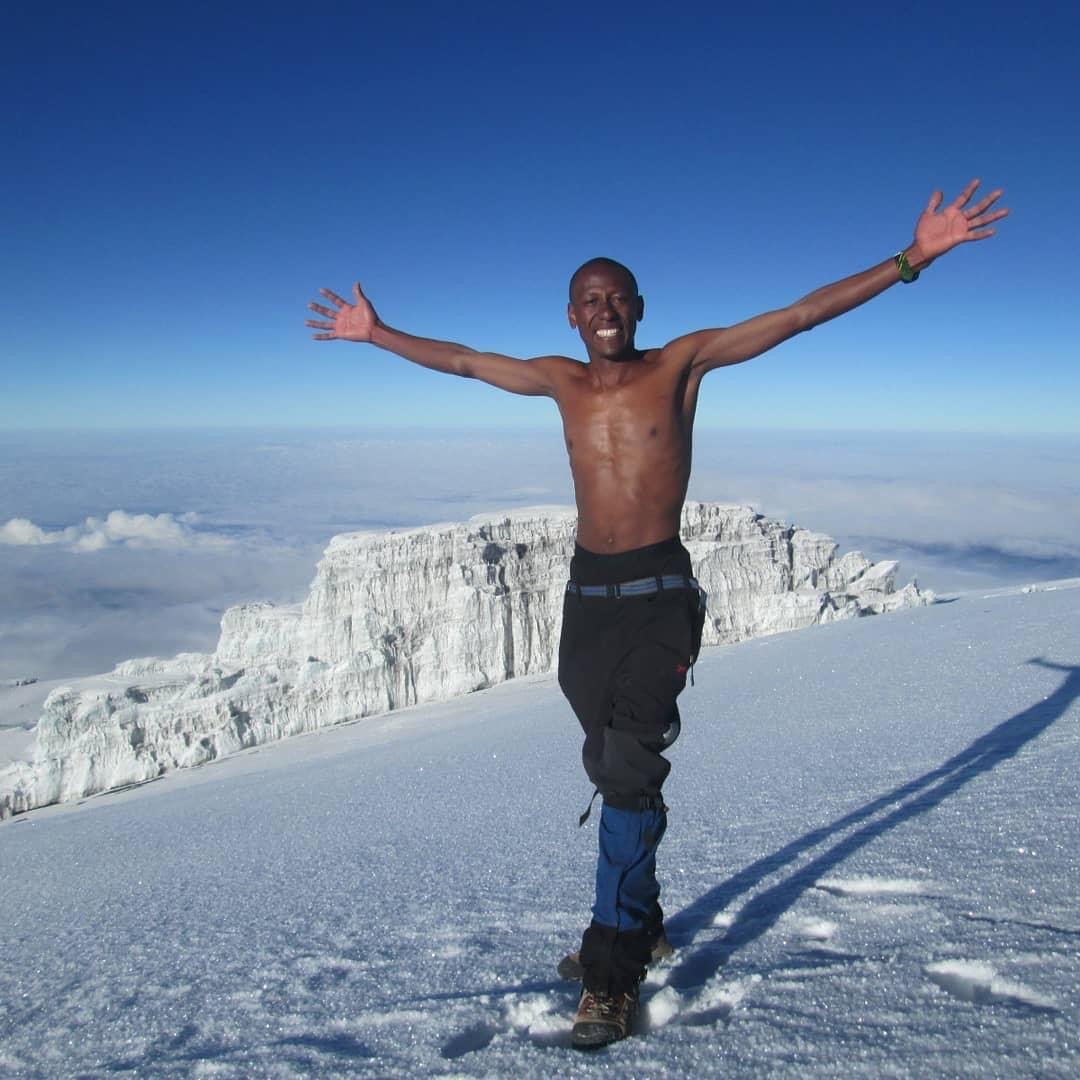
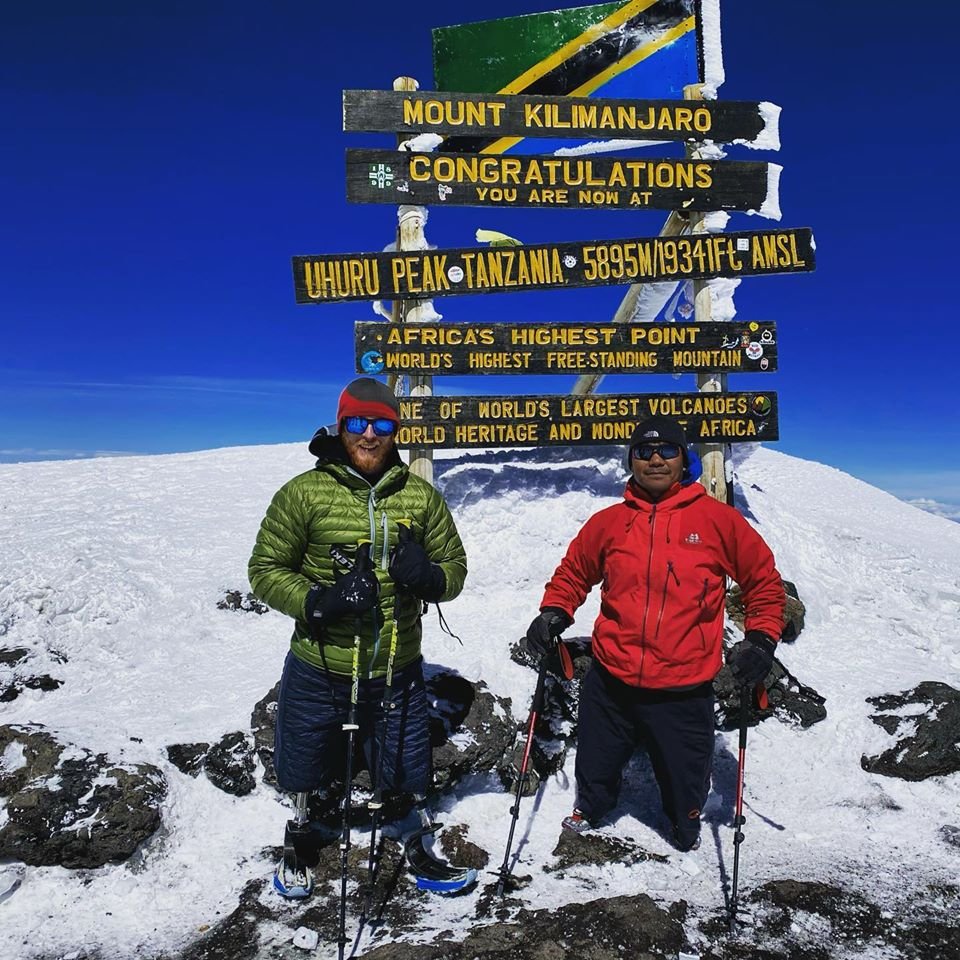
Very early in the morning (around midnight), we begin our push to the summit. This is the most mentally and physically challenging portion of the trek. The wind and cold at this elevation and time of day can be extreme. We ascend in the darkness for several hours while taking frequent, but short, breaks. Near Stella Point (18,900 ft), you will be rewarded with the most magnificent sunrise you are ever likely to see coming over Mawenzi Peak. Finally, we arrive at Uhuru Peak- the highest point on Mount Kilimanjaro and the continent of Africa. From the summit, we now make our descent continuing straight down to the Mweka Hut camp site, stopping at Barafu for lunch. The trail is very rocky and can be quite hard on the knees; trekking poles are helpful. Mweka Camp is situated in the upper forest and mist, or rain can be expected in the late afternoon. Later in the evening, we enjoy our last dinner on the mountain and a well-earned sleep.
Hiking time: 12 – 14 hours (17 km)
Ascent: 1295 m
Descent: 2795 m
Altitude: 5895 m
Accommodation: Camping
Meals included: Breakfast / Lunch / Dinner
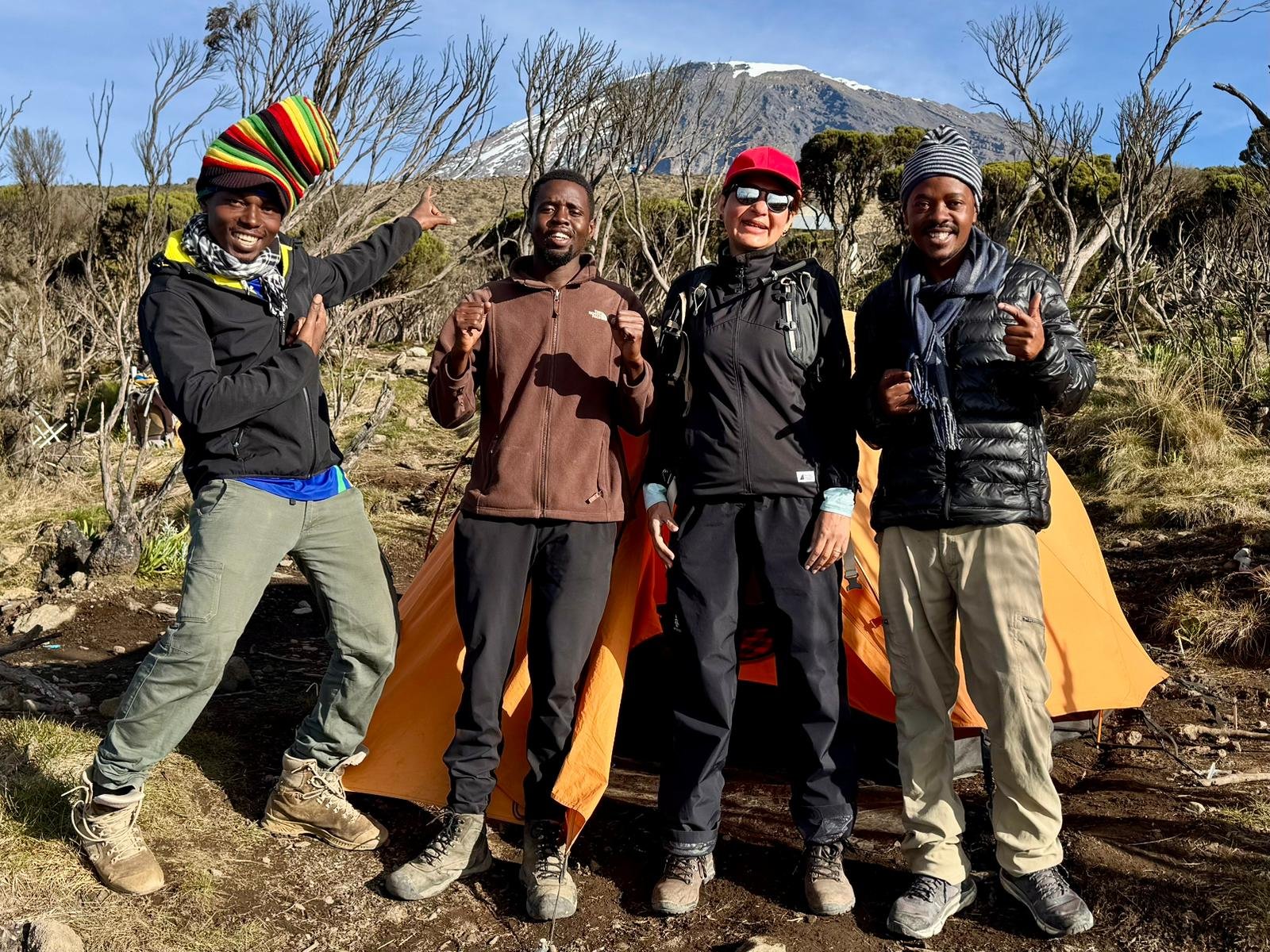
On our last day, we continue the descent to Mweka Gate and collect the summit certificates. At lower elevations, it can be wet and muddy. From the gate, we continue another hour to Mweka Village. A vehicle will meet us at Mweka Village to drive us back to the hotel in Moshi for shower and then later our driver will pick you and be transferred to Moshi at the hotel of your choice and this will mark the end of our tour.
Transport: Private transfer (0.5 hour, 17 km)
Hiking time: 3 – 4 hours (10 km)
Descent: 1300 m
Altitude: 3100 m
Meals included: Breakfast / Lunch
Accommodation: Parkview Inn
Kilimanjaro is the only highest mountain which allows you to reach its summit Uhuru peak without any technical skills. Climbing Kilimanjaro is easy compared to other mountains, as it has easier terrains than steeps. However, you may need to use your hands while climbing the Barranco wall as it is the only steep wall in the entire Kilimanjaro zone. This is one of the important Kilimanjaro FAQs and has a proper answer. During wet season you may require hiking poles because the rocks are more slippery. Make sure you wear proper hiking boots or gaiters while you are climbing Kilimanjaro.
The weather in Kilimanjaro is considered as wet season and dry season. Before knowing about Best Time To Climb Kilimanjaro”, the weathers and climates are very important to decide for Climbing Mount Kilimanjaro. All the Kilimanjaro routes pass the ecological or climatic zones where the weather tends to change hourly due to the high-altitude condition and the trade winds. The wet season has more rainfall and dry season has lesser rainfall with more dry days. The main climatic zones are: Cultivation zone, Rainforest zone, Heath or moorland zone, Highland dessert zone and Artic zone. Each zone are unique in its own way and also have a distinct weather conditions all the way.
Best time to climb Kilimanjaro is a major Kilimanjaro Faq’s asked by most of the trekkers. Mount Kilimanjaro can be ascended year around and all the Kilimanjaro routes will support climbing Kilimanjaro round the year. As Kilimanjaro is near to equator the region experiences a very less extremes of winter and summer weather, rather it has wet and dry seasons. Hence, the Best Time To Climb Kilimanjaro is dry season which is warm. It is advised to avoid climbing Kilimanjaro during wet season for beginners. However, if you are with a professional climber and have all the safety precautions taken, then climbing Kilimanjaro in wet season would be really adventures. This also depends on your preference of Kilimanjaro Routes. You will need to choose best Kilimanjaro route and also choose a longer itinerary for better acclimatization.
You will be provided with tents, camping gear, food, utensils, and guidance. You should bring your own sleeping bag, water system, personal clothing, light duffle bag, and day pack. Hiking poles can be rented. If “What Do I Need To Climb Kilimanjaro?” is your question, the following list is for you. A packing list is provided to all climbers, along with our pre-departure packet: 1 mountaineering sleeping bag 1 LED flashlight with spare batteries 1 Pair of comfortable trekking boots 1 towel 2 fleece jackets 1 down jacket or long-sleeved wind-breaker 1 set of thermal underwear 2 pairs of trekking trousers 1 waterproof jacket 1 pair of waterproof trousers 1 sun hat 1 pair of sunglasses.
The Kilimanjaro Food during your climb will help you to avoid from Kilimanjaro Altitude Sickness. The menu on Kilimanjaro is designed to ensure your food intake matches your level of exertion. It will provide you with a good balance of protein, carbohydrates, fruit and vegetables. When you are at altitude you could start to feel uneasy and your appetite may be suppressed, so the meals prepared at high altitude usually contain more carbohydrates and less protein to help you to digest your food. Your meals will be prepared by your cooks on Kilimanjaro and the food will be carried by your porters. You will be provided with Porridge, Toast, Pancakes, Egg, Smoked sausages, Tea, coffee and Hot chocolate. Sandwiches, Hard boiled eggs, Biscuits, Fruit juice. Soup, Pasts, Rice, Potatoes, Chicken, Beef, vegetables, Salad and Fresh fruits.
The Kilimanjaro Food during your climb will help you to avoid from Kilimanjaro Altitude Sickness. The menu on Kilimanjaro is designed to ensure your food intake matches your level of exertion. It will provide you with a good balance of protein, carbohydrates, fruit and vegetables. When you are at altitude you could start to feel uneasy and your appetite may be suppressed, so the meals prepared at high altitude usually contain more carbohydrates and less protein to help you to digest your food. Your meals will be prepared by your cooks on Kilimanjaro and the food will be carried by your porters. You will be provided with Porridge, Toast, Pancakes, Egg, Smoked sausages, Tea, coffee and Hot chocolate. Sandwiches, Hard boiled eggs, Biscuits, Fruit juice. Soup, Pasts, Rice, Potatoes, Chicken, Beef, vegetables, Salad and Fresh fruits.
The guides and porters are professionally trained to handle the emergency situations. They are equipped with first aid kits and also trained to provide first aid medicines. In case of any severe emergency the recuse team will be available to help you descend through a stretcher or in case of more sever emergency there will be a helicopter rescue team who will take you to the high altitude medical clinic and transfer to the best hospital in the city.
Yes, the drinking water is safe and there will be available enough water for all the climbers. We recommend you to carry 2-3 litres of water with you and add water purification tablets to it. This will help to purify the flowing water in the mountains and you will be safe to drink water in the mountains. It is suggested to drink more water to keep yourself hydrated and energised while Climbing Mount Kilimanjaro.
While it comes to altitude sickness, then the question would be “How hard is it to climb Kilimanjaro?” The high-altitude level needs physical fitness and mental determination to climb Kilimanjaro instead of high-altitude medications. However, it is your preference to take high altitude medication while climbing Kilimanjaro, one of the tablet is Diamox which will help you control the high altitude sickness. It make you urinate more. So, we recommend to make yourself fit and train for Kilimanjaro and then attempt to the summit.
It is better to check with your doctor or the Centers for Disease Control before leaving for any recommendations. This one of the major Mount Kilimanjaro Facts you should take into consideration. However, while entering Tanzania you will need a yellow fever vaccination certificate and also malaria vaccination certificate. Apart from these other vaccinations are not compulsory. However, it is better to consult your doctor for Vaccinations for Kilimanjaro if you have asthma or any chronic health problems.
Climbing Kilimanjaro with Local Tour Guide
Tanzania Local Tour Guide Services
Member Since 2026
Bali, Indonesia
Aswan, Egypt


The Roof of Africa!